

We put collars and leashes on our dogs, and determine their meal and walk times. We take them to the vet, cuddle with them on the sofa, and teach them tricks. Yet when it comes to feeding, many believe they have a wolf and a hunter sitting at home on their sofa. And between us: the idea of a pack of Chihuahuas trying to hunt a cow makes us chuckle a little, doesn't it?!
And yet, one notion persists to this day:
"But the dog is descended from the wolf, so it needs meat!"

At some point, Carla simply got tired of exactly this sentence. Because if a wild hunter has become our most loyal companion, then surely more has changed than just everyday life, right?
So, she started to look more closely. And in doing so, she stumbled upon a question:
“How did the wolf actually become our dog?”
To understand how much time passed until the dog became our best friend, we have to look waaay back; after all, there is a long history between the wilderness and the living room!
Once upon a time...
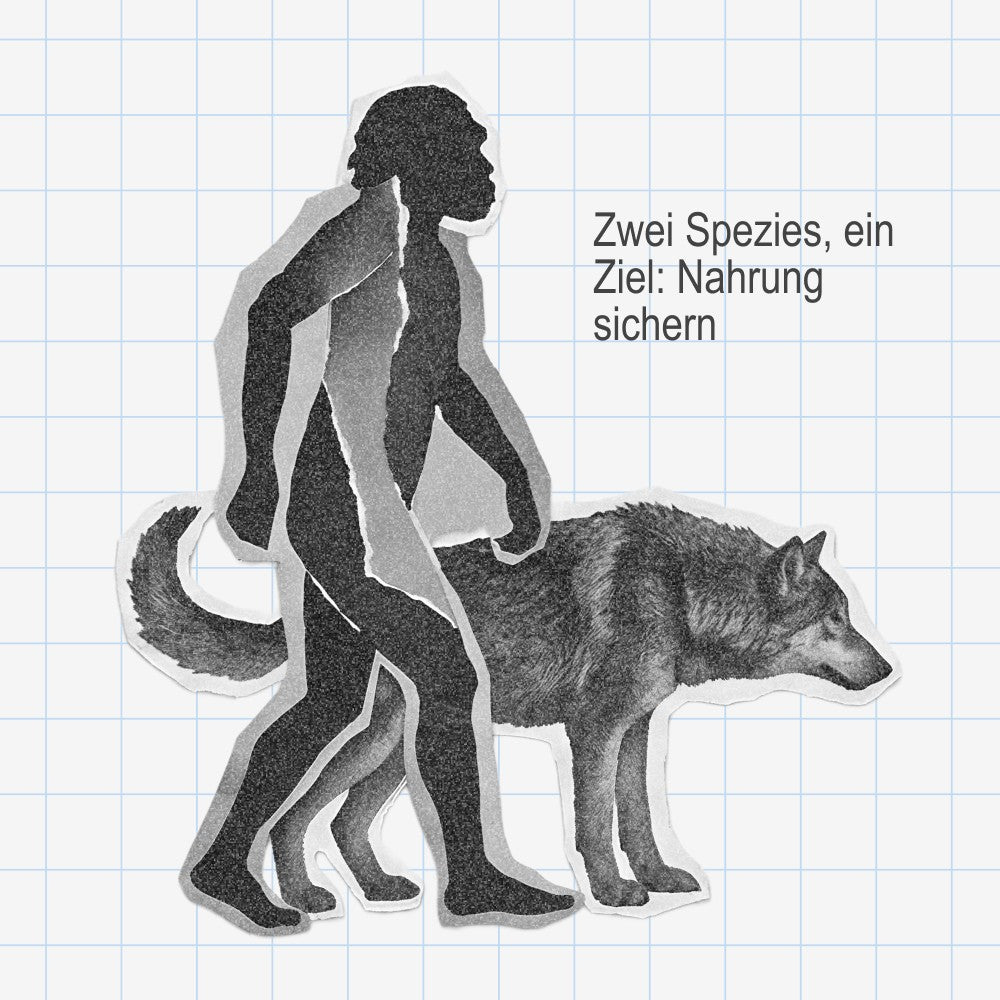
In the beginning, humans and wolves were above all one thing: competitors. Both hunted the same prey, moved through the same territories – and regularly got in each other's way.
Once upon a time...
In the beginning, humans and wolves were above all one thing: competitors. Both hunted the same prey, moved through the same territories – and regularly got in each other's way.
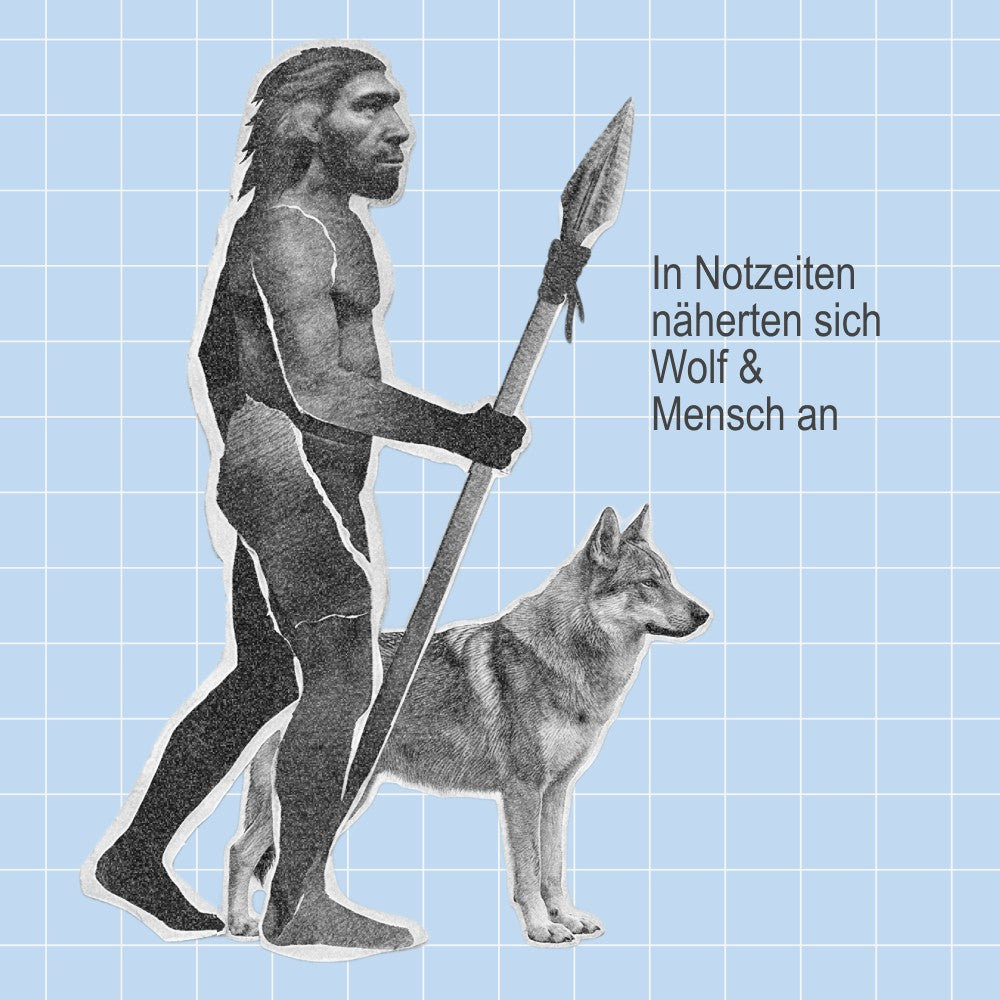
Only in times of hardship did that change. Some wolves approached human camps and scavenged for food in the waste. The tamer wolves had an advantage, because over time they were tolerated by humans. Thus, an initial connection was formed: The wolf found food near humans. Humans benefited from the wolf's alertness and skills – a marriage of convenience, so to speak.
Only in times of hardship did that change. Some wolves approached human camps and scavenged for food in the waste. The tamer wolves had an advantage, because over time they were tolerated by humans. Thus, an initial connection was formed: The wolf found food near humans. Humans benefited from the wolf's alertness and skills – a marriage of convenience, so to speak.
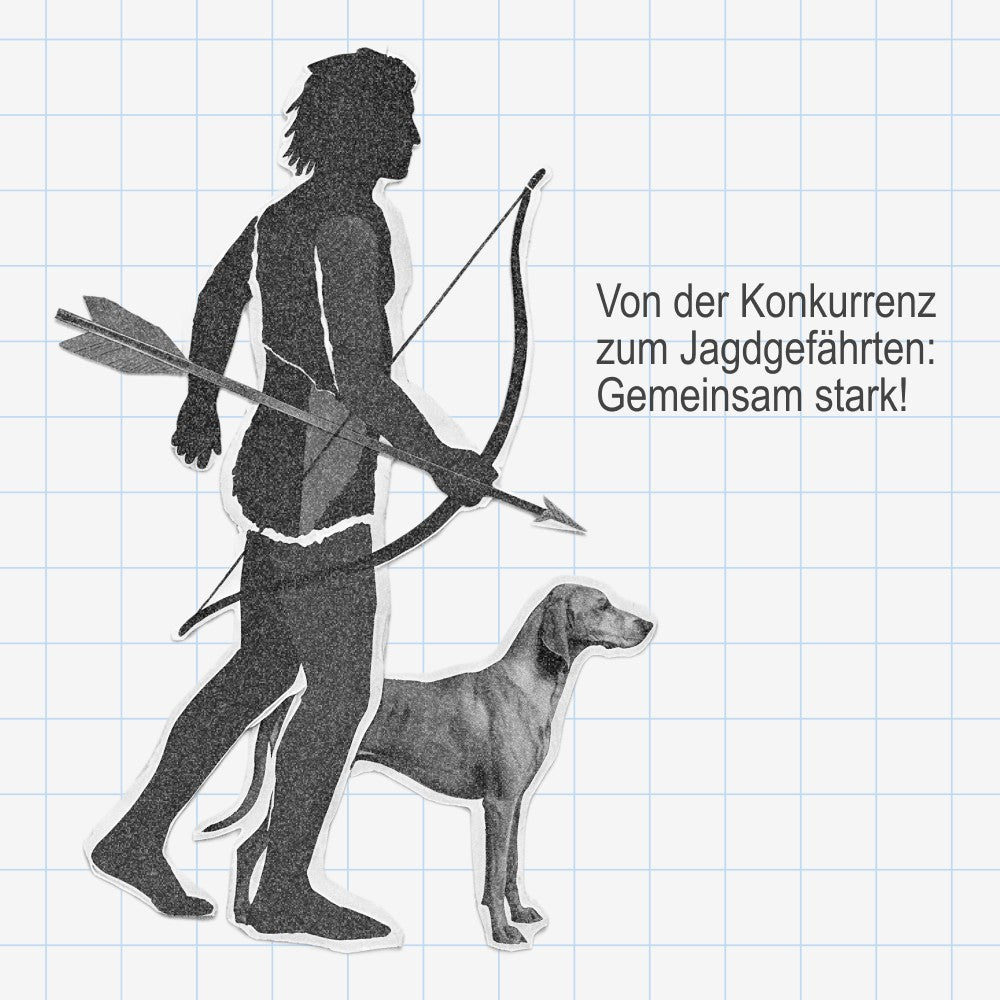
It is not definitively known exactly when the wolf became the dog. Researchers assume that domestication could have begun over 15,000 years ago.
Large prey animals disappeared, and smaller, faster ones became the focus. Over time, humans also intervened actively: wolf pups were taken in and raised. This began a process of selective breeding – preference was given to animals that were particularly tame and open to humans.
The wolf helped with hunting, tracked animals, and drove them toward the humans. Distance turned into cooperation. Cooperation turned into trust, and eventually, something more.
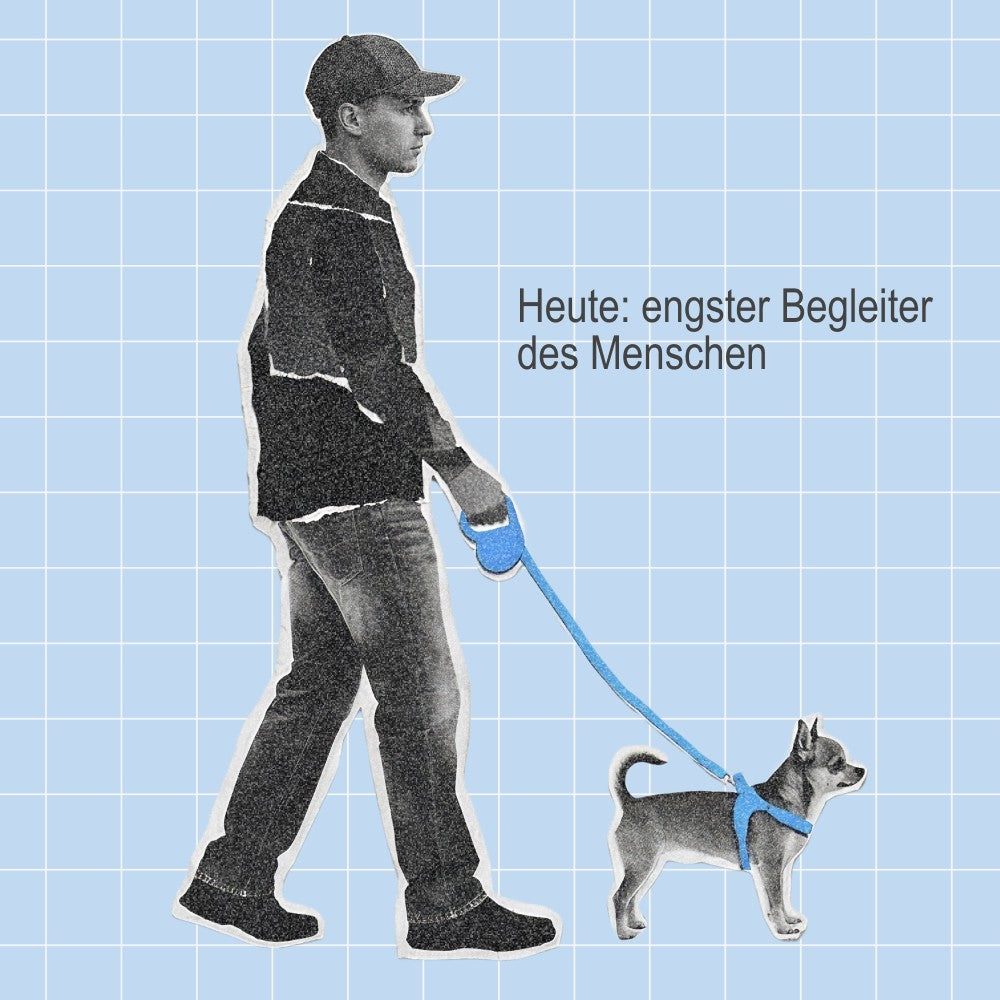
For when humans became sedentary, the role of the wolf changed once again: from hunter to protector. From hunting companion to guardian of home and hearth. An animal that adapted increasingly to human life – and thus, step by step, became what we call our dog today.
For when humans became sedentary, the role of the wolf changed once again: from hunter to protector. From hunting companion to guardian of home and hearth. An animal that adapted increasingly to human life – and thus, step by step, became what we call our dog today.
You see: There is a looot of time and development between the wolf and the dog. And that is exactly why the question arises: If so much has changed – why should their diet have remained the same, of all things? Carla quickly found an answer to that, too: It hasn't!
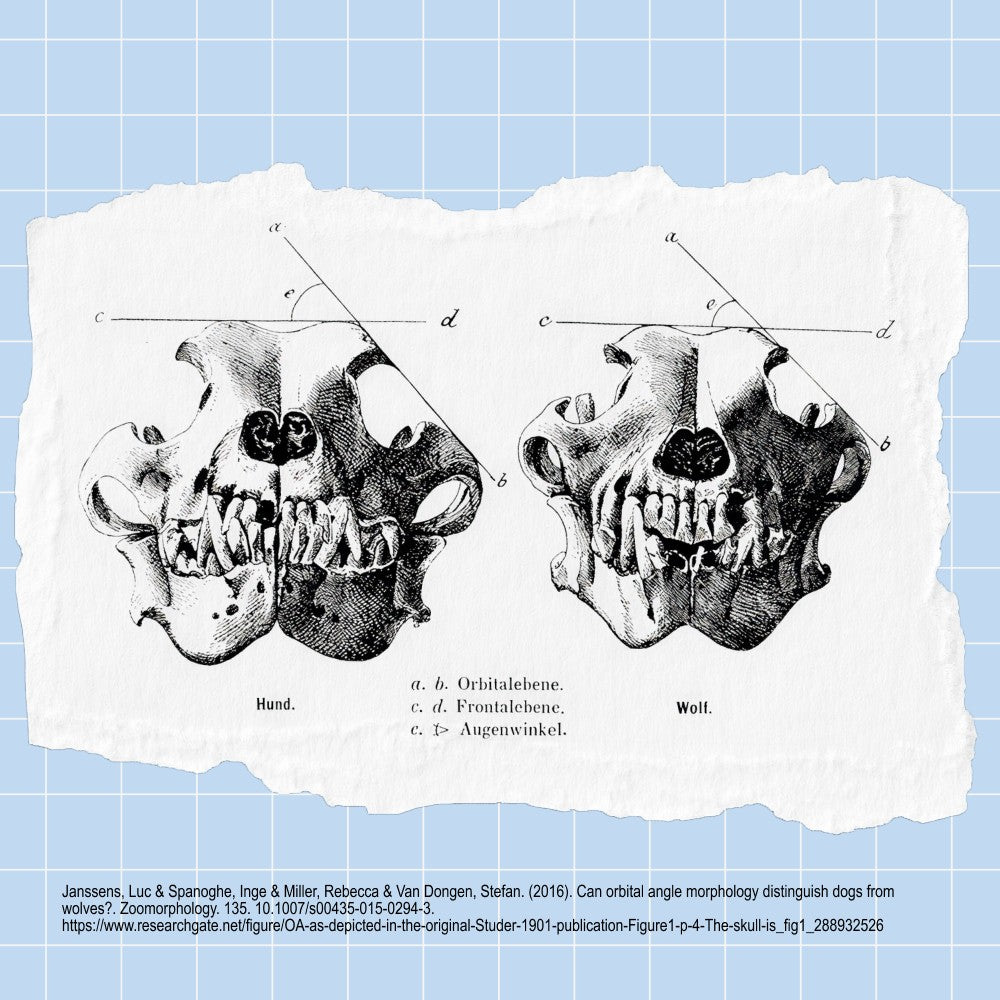
Because domestication has changed not only their behavior, but also their bodies: As you can see in the graphic, wolves and dogs today differ significantly in several respects – including their teeth, but also their digestive system and their ability to process food.
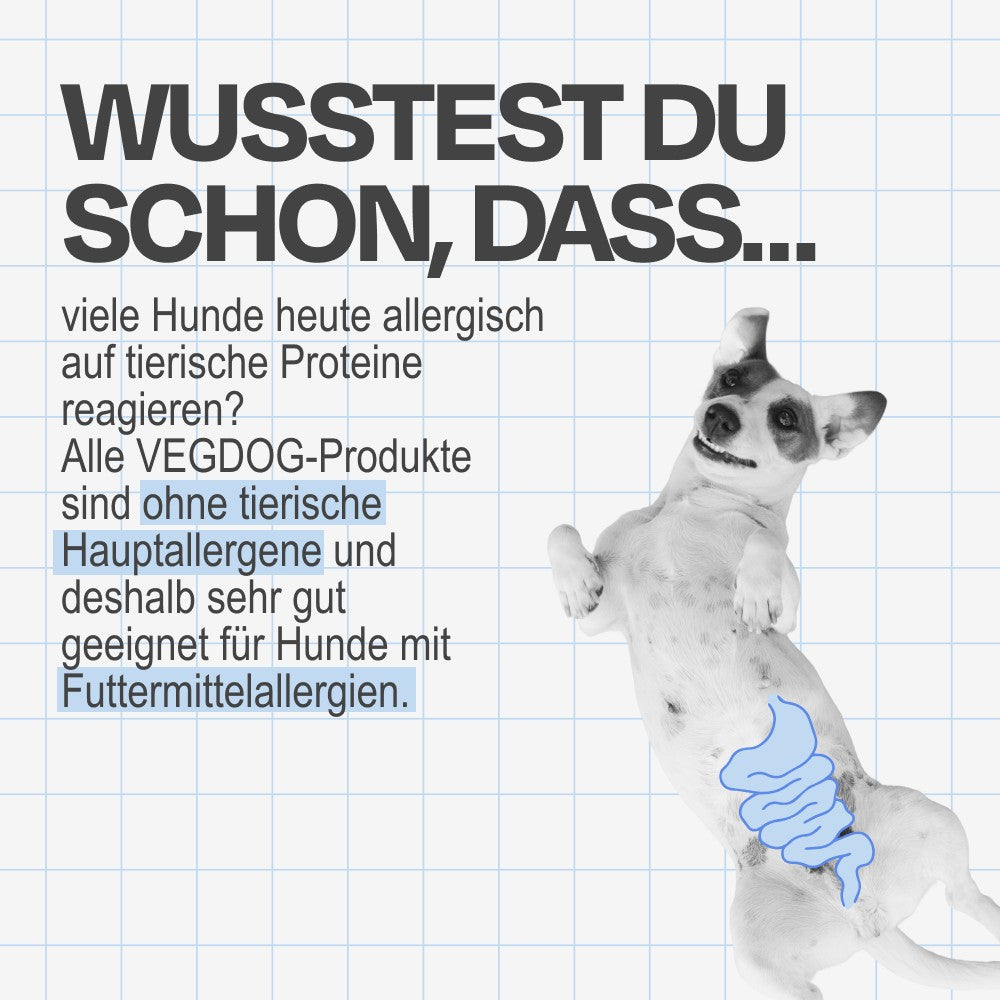
While wolves as hunters are specialized in a meat-based diet, dogs have adapted over thousands of years to living by our side. They lived near humans and fed on what was left over – often food scraps with a high proportion of plant-based components, as meat was long a precious commodity.
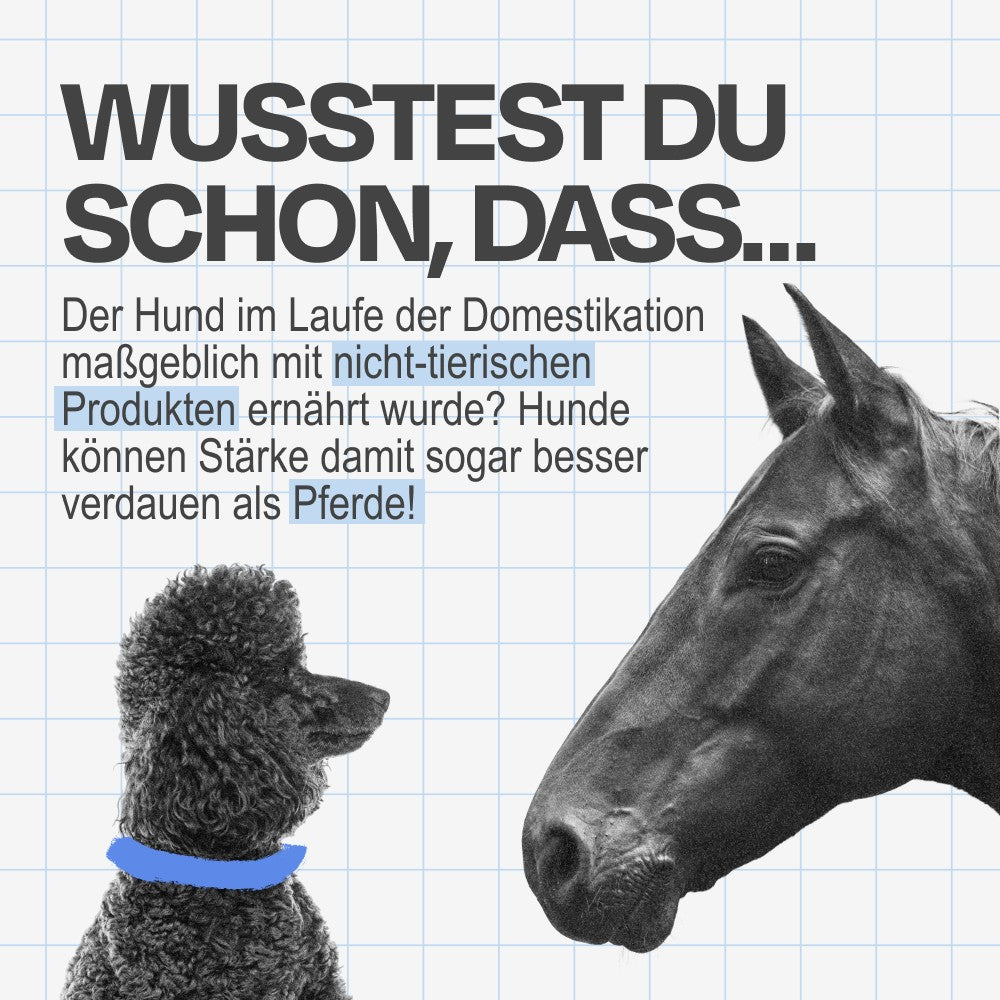
Thus, dogs developed the ability to digest starch significantly better than their wild ancestors. This is still evident today: dogs are no longer pure hunters, but rather omnivores – with a digestive system that has adapted to a more diverse diet.
What they need is not "prey" in their bowl.
What they need are nutrients.
First and foremost: protein.
And it can just as easily come from plant-based sources – provided it is properly balanced.
Good to know: Today, dogs – just like us humans – often consume too much protein, usually from animal sources. It is readily available and cheap. Unlike in the past, when it was a rarity.
And even more importantly: protein is only part of the whole. Because a long and healthy life for a dog requires more than just protein:
- Essential fatty acids for skin and coat.
- Vitamins for metabolism, growth, and cellular health.
- And a balanced interaction of all nutrients.
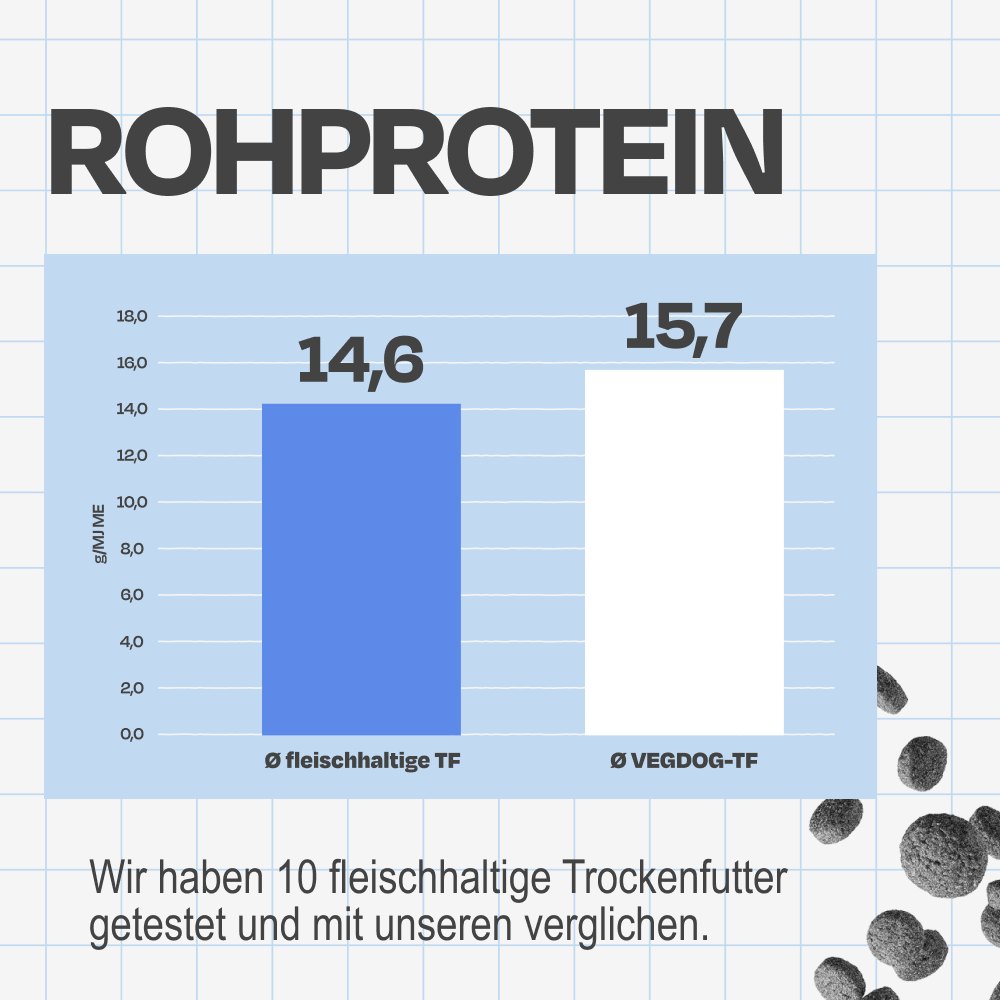
Good to know: Our comparative analysis shows: VEGDOG provides on average just as much protein as meat-based dry food – while meeting all scientifically defined nutritional requirements.
Good to know: Our comparative analysis shows: VEGDOG provides on average just as much protein as meat-based dry food – while meeting all scientifically defined nutritional requirements.
And that is precisely why it is worth taking a look in the bowl – and asking ourselves whether we are really still feeding a wolf or long since our best friend – 0.2% wolf, 100% couch potato!