






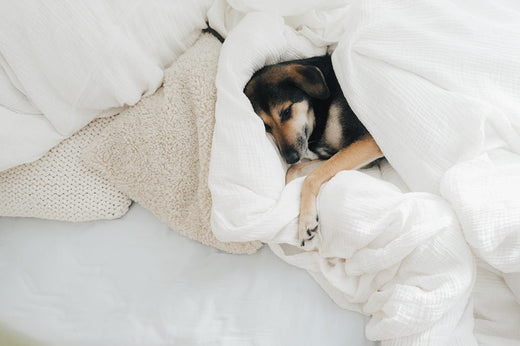
How much sleep does a dog need?
Good sleep is important - for both two- and four-legged friends! Learn more about your dog's sleep and how you can support a restful night's sleep in this article!
 Author: Carla
GOOD SLEEP FOR DOGS: HOW TO SUPPORT YOUR FOUR-LEGGED FRIEND
Restful sleep is essential for your dog's health and well-being. Much like us humans, good sleep for dogs ensures regeneration, a strong immune system, and inner balance. In this blog article, you will learn how to promote your four-legged friend's sleep, what you should look out for, and which habits are important to provide them with the best possible recovery.
Why sleep is important for dogs
While dogs are sleeping, important processes occur in their bodies:
- Regeneration: Muscles and tissues are renewed, and the body recovers from physical exertion.
- Strengthening the immune system: During deep sleep phases, the body's defenses are mobilized, which helps prevent illness.
- Stress relief: Sufficient sleep helps dogs process their experiences and remain stress-free.
- Learning processes: Newly learned skills are consolidated during sleep – ideal if you are currently training your dog.
Sleep requirements: How much sleep does your dog need per day?
A dog's sleep requirement depends on their age, size, and activity level:
- Puppies: Up to 20 hours a day – they need a lot of sleep to grow and process new impressions.
- Adult dogs: An average of 12 to 14 hours per day. Particularly active breeds may require more rest periods.
- Seniors: Between 16 and 18 hours a day – older dogs sleep more to conserve their energy reserves.
In addition to deep sleep phases, dogs also need periods of dozing, during which they relax and balance their energy levels.
Can dogs dream?
During sleep, dogs go through various sleep phases, including the REM (Rapid Eye Movement) phase, in which they can dream. Anyone who has ever watched their dog sleep may have noticed them twitching, moving their paws, or even quietly barking and growling. All of this indicates that they are dreaming and processing the day's experiences while asleep.
The optimal sleeping spot for your dog
- Quiet location: Choose an area away from high-traffic zones so your dog is not constantly disturbed.
- Comfortable bedding: Orthopedic beds are particularly suitable for dogs with joint problems. Ensure the lying surface is soft, supportive, and easy to clean.
- Appropriate size: The sleeping area should offer enough space for your dog to stretch out.
- Pleasant climate: Avoid drafts and overheated rooms. A moderate room climate supports sleep comfort.
Rituals and tips for better dog sleep
Consistent routines and targeted measures can help improve your dog's sleep:
- Daily structure: Dogs love regularity. Set feeding times, walking rituals, and rest periods provide them with a sense of security.
- Evening ritual: A relaxed evening walk or quiet cuddling helps your dog wind down.
- Activities: A well-exercised dog sleeps deeper and better. Incorporate mental and physical challenges into the daily schedule.
- Sense of security: Some dogs prefer a protected sleeping environment, e.g., a dog crate or an area with clear boundaries.
Sleeping positions and their meaning
The posture in which your dog sleeps reveals a lot about their well-being:
- Lying on their side: Your dog feels safe and relaxed.
- Curled up: Typical for dogs seeking warmth or wanting to protect themselves.
- Lying on their back: A sign of total trust and relaxation.
- Lying on their stomach: Especially common in active dogs who want to remain alert.
Dog gets too little sleep: Possible consequences of sleep deprivation
Sleep is just as important for dogs as it is for us humans. A lack of rest can negatively affect your furry friend's health and well-being. Here are some possible consequences of sleep deprivation:
- Behavioral changes: Your four-legged friend might exhibit aggressive or hyperactive behavior.
- Difficulty concentrating: Your dog may have trouble following commands or reacting appropriately to stimuli.
- Susceptibility to illness: Lack of sleep weakens the immune system, which can promote infections and other ailments.
- Increased risk of injury: Excessive fatigue can impair their responsiveness, which can lead to accidents.
Warning signs: When sleep is disturbed
Sometimes sleep problems point to health or emotional challenges. Watch out for:
- Restlessness or frequent waking: This can be triggered by pain, itching, or stress.
- Anxious behavior: Changes in daily life, such as moving or new noises, can affect their sleep.
- Avoiding the sleeping spot: Check whether the sleeping spot is truly comfortable and suitable.
In such cases, you should consult a veterinarian if necessary to rule out underlying health issues.
Conclusion: Your contribution to restful sleep
A relaxed and well-rested dog is happier and healthier. With a cozy sleeping spot, consistent routines, and sufficient exercise, you can do a lot to ensure your dog sleeps optimally. Always pay attention to their individual needs – because every dog is unique, even when it comes to sleep habits.
