




Autumn Shedding: Why Your Dog Is Suddenly Losing So Much Hair
As soon as it starts to feel like autumn outside, dog hair begins to accumulate indoors. This is often due to a completely natural seasonal coat change.
 Author: Selina
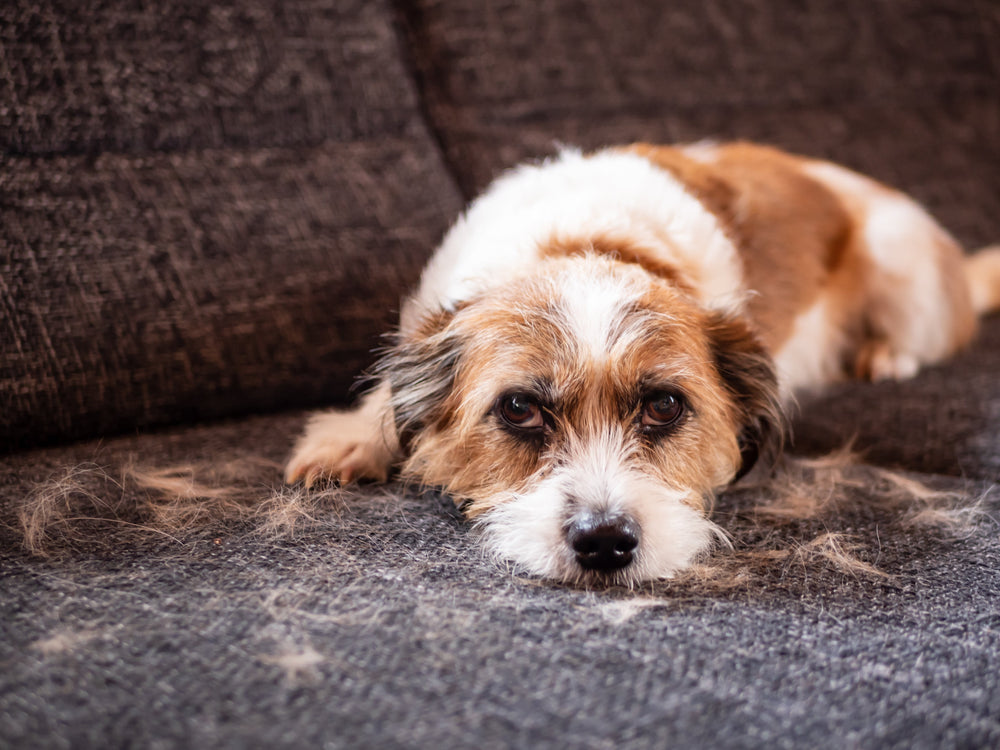
It felt like summer just a moment ago – and suddenly dog hair is sticking to the sofa, your clothes, and everywhere else it doesn't belong. However, if your dog suddenly starts shedding a lot, it doesn't necessarily have to be a cause for concern. Often, it's just the perfectly normal coat change in Autumn . Your four-legged friend's coat adapts to the cooler season. You'll find out what happens and how you can support your dog here.
Why does my dog lose so much hair in autumn?
For many dogs, the coat change follows a seasonal rhythm. The shortening days, in particular, influence the change of the coat. Your dog gradually develops its winter coat and sheds part of its lighter summer coat. The VDH lists September and October, among other months, as typical times for coat changes.
The coat change is particularly visible in breeds with double coats. In addition to the topcoat, they have a soft undercoat that can become denser in the cold season. At the same time, older hairs fall out. And they then like to end up on the carpet, dog bed, and favorite sweater.
How intensely a dog sheds varies from dog to dog. Coat type, breed, age, and living conditions can influence how pronounced the seasonal coat change is.
How long does the coat change in dogs last?
Usually, the hairy phase lasts for several weeks. As a rough guide, the German Association for Dog Welfare states that a coat change takes about six to eight weeks. However, the exact period can vary from dog to dog.
For some four-legged friends, the transition is barely noticeable. Others, on the other hand, leave impressive piles of hair around the house for several weeks. Even dogs that live mostly indoors can show less pronounced seasonal differences.
How you can support the coat change
The natural hair change cannot be completely prevented. However, with a suitable grooming routine, you can support your dog during this time and specifically remove loose hair.
- Brush regularly: A brush suitable for the coat type loosens dead hair and excess undercoat.
- Better short and relaxed: Several short grooming sessions can be more pleasant than an extended brushing session.
- Keep an eye on the skin: While brushing, you can also look out for redness, scales, or other noticeable areas.
- Pay attention to a balanced diet: The body needs various nutrients for skin and coat. These include, among others, amino acids, fatty acids, Vitamins , and minerals. The key is the balanced composition of the entire ration.
Our tip: If your dog is only moderately enthusiastic about brushing, small snacks can ensure relaxed moments. For this, our Veggies Skincare are suitable, for example. They contain hemp seeds, among other things, and thus essential fatty acids that can contribute to skin and coat health.
When could there be more than just a coat change behind it?
A normal coat change usually affects the coat over a large area. If significant changes in the skin or coat occur at the same time, it is worth taking a closer look. Some of the symptoms you should watch out for include:
- bald or significantly thinned areas
- severe or prolonged itching
- reddened, scaly, or oozing skin
- frequent scratching, licking, or biting
- unusually severe hair loss outside the typical coat change periods
Such changes do not necessarily have to be related to the normal seasonal hair change. Since various causes are possible, you should seek veterinary advice for pronounced or prolonged abnormalities.
Hair everywhere? That too will pass
A few hairy weeks are part of the annual rhythm for many dogs. Regular brushing helps remove loose hair while also keeping an eye on the skin and coat. A balanced diet also provides your dog with important nutrients.
This is how you can support your four-legged friend well through the coat change – even if the piles of hair at home cannot be completely avoided. And if after every brushing round there seems to be enough hair left for a second dog: The next vacuuming session is sure to come.