
||MEETING NUTRITIONAL NEEDS|| Proteins in the bowl! DIY recipe
 Author: Alena
 Proofreader: Carla
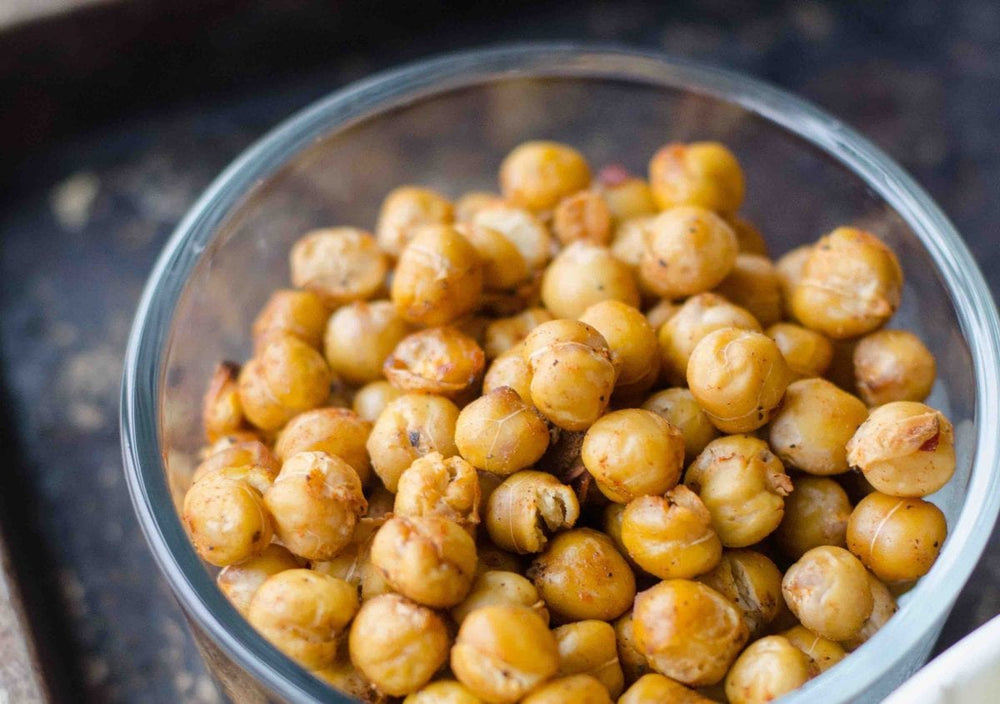
Today we have a nutritionally complete recipe suggestion for the ultimate protein kick. We have combined tofu, arguably the best-known source of protein, with organic red lentils and healthy chickpeas. Their name comes from the Latin (cicer for pea). Strictly speaking, this round legume is therefore called a "pea pea," which we find a bit giggly ;-). Moreover, it is extremely healthy. In addition to its positive effect on digestion, it counteracts oxidative stress and thus protects our darlings' cells.
Shopping List
| Zutaten | 5 kg Hund | 15 kg Hund | 25 kg Hund |
|---|---|---|---|
| Kichererbsen (bereits eingeweicht) | 30 g | 65 g | 100 g |
| Linsen (Trockengewicht) | 30 g | 65 g | 100 g |
| Tofu in Bioqualität | 50 g | 100 g | 120 g |
| Zucchini | 15 g | 30 g | 40 g |
| Möhre | 15 g | 30 g | 40 g |
| Banane | 20 g | 40 g | 50 g |
| Hochwertiges Öl (z. B. „Dr. Budwig Omega-3 DHA mit Algenöl“) | 3 g | 10 g | 18 g |
| ALL-IN VELUXE | 5 g | 10 g | 14 g |
Please note that chickpeas must never be fed raw. The substance phasin causes red blood cells to clump together. Uncooked, this can lead to severe bleeding.
We kept it simple today and used pre-cooked chickpeas from a jar. For preparing the raw alternative, the following applies: soak overnight and cook for one to two hours the next day. Zucchini, carrots, and bananas provide plenty of vitamins and are filling with few calories.
A high-quality vegetable oil ensures the supply of essential omega-3 fatty acids. Our ALL-IN VELUXE provides everything else, for example taurine, carnitine, and vitamin B12, which are most frequently lacking in vegan rations.
The quantities for a complete daily ration are as follows (please note that the ingredients have been balanced for our ALL-IN VELUXE):
Preparation
1. Puree the ingredients2. Grate the carrots and zucchini3. Bon appétit!
The chickpeas are put into the blender, which makes them much easier to digest. Then add the banana. Zucchini and carrot are only grated; this fills the stomach a bit better and allows the fibers to take effect in the intestine.
The lentils are cooked until they form a proper "mush" and you can see that all the skins have split open. This usually requires a cooking time of 15 to 20 minutes. The red varieties are particularly suitable as they require comparatively less time to cook through.
Last but not least, the tofu, the oil, and the ALL-IN VELUXE are mixed in.
We like to use soft tofu, which can be easily mashed with a fork. We add a high-quality vegetable oil (e.g., "Dr. Budwig Omega-3 DHA with algae oil"; dogs do not need olive oil). This contains two important fatty acids: EPA and DHA. The necessity of supplementation has not yet been conclusively proven scientifically. However, various studies have confirmed significant benefits for numerous organ systems (for example, the skin and joints).
Our ALL-IN VELUXE is added to the bowl once all ingredients have cooled down so that the nutrients are not destroyed!
1. Cook lentils, pasta, and vegetables
Basically: For starchy products like lentils, pasta, rice, etc., always assume double the cooking time compared to humans. This means, for example: Pasta that is cooked for 10 minutes for humans must be cooked for 20 minutes for the dog in order to optimally break down the starch and make it digestible for the dog. When feeding vegetables, the rule is: what you as a human eat raw, your dog can also receive raw. Everything you have to cook yourself should also be cooked for your dog. Therefore, you may feed raw, for example:
Carrots, cucumber, lettuce, zucchini, kohlrabi, pumpkin
The following should be cooked:
Corn, fennel, spinach, broccoli, cauliflower, peas, potatoes
Please make sure to wash the vegetables well, especially if they are fed with the peel on. Many dog owners also like to use organic quality. You can alternate the different varieties as you wish. However, be aware that legumes and corn contain more calories because they are starchy.
Vegetable tolerance is individual. For example, peas and beans contain oligosaccharides, which are metabolized into short-chain fatty acids in the intestine and can lead to diarrhea and flatulence in large quantities. Simply try out different varieties and find out what your dog likes best and tolerates best.
How you prepare the vegetables is up to you: you can chop, grate, blend, steam, or cook them and then puree them. Picky animals can perhaps be convinced with cooked carrots. The digestibility of finely chopped or cooked vegetables is better. Heat the vegetables briefly and gently to improve the retention of water-soluble vitamins. You are also welcome to add a splash of cooled cooking water over the food.
2. Add fruit cooked or raw
Fruit can also be combined and alternated – depending on what your dog tolerates. Suitable are, for example, apples, oranges, bananas, raspberries, strawberries, melons. You don't have to worry about the fruit sugar contained. When feeding fresh fruit, this does not lead to obesity. For obese animals, however, the amounts of banana should be kept low and dried fruit should be avoided if possible. This has a higher calorie content and can also lead to flatulence and diarrhea. Fruit seeds should be removed as they contain cyanide. Please wash the fruit thoroughly before feeding. Here, too, you can let your imagination run wild with the preparation – from chopped to grated or as a smoothie – everything that is fun is allowed. Read our article "Smoothie for Dogs" and "Summertime is Ice Cream Time".
QUANTITY CALCULATION EXAMPLE: The calculation of the quantity is based on the different weight classes. A small dog, for example, needs more in relation to body weight than a large dog. You always orient yourself towards the amount of the highest weight class specified by us. If your dog, for example, weighs 6 kg, you orient yourself towards the weight class for 10 kg. If your dog, for example, weighs 32 kg, you orient yourself towards the weight class for 25 kg, as that is the highest weight class we specify.
Here is a calculation example for you if your dog weighs 32 kg, for example: The highest specified weight class is 25 kg, so that is your required reference quantity. A 25 kg dog needs 100g of chickpeas daily. Accordingly, 1kg of dog in the 25 kg weight class needs —> 100g / 25 kg = 4g chickpeas per kg of body weight. Then a 32 kg dog needs 4g x 32 = 128g chickpeas/day. You do this calculation for all ingredients. I hope we could help you.
We wish you bon appétit!
Your VEGDOG Team